Find My Pet App
Find My Pet is an app that helps pet owners locate lost pets. It has two main components: a collar with a GPS-enabled tag that continuously transmits the pet’s location, and an app with a mapping system to track it.
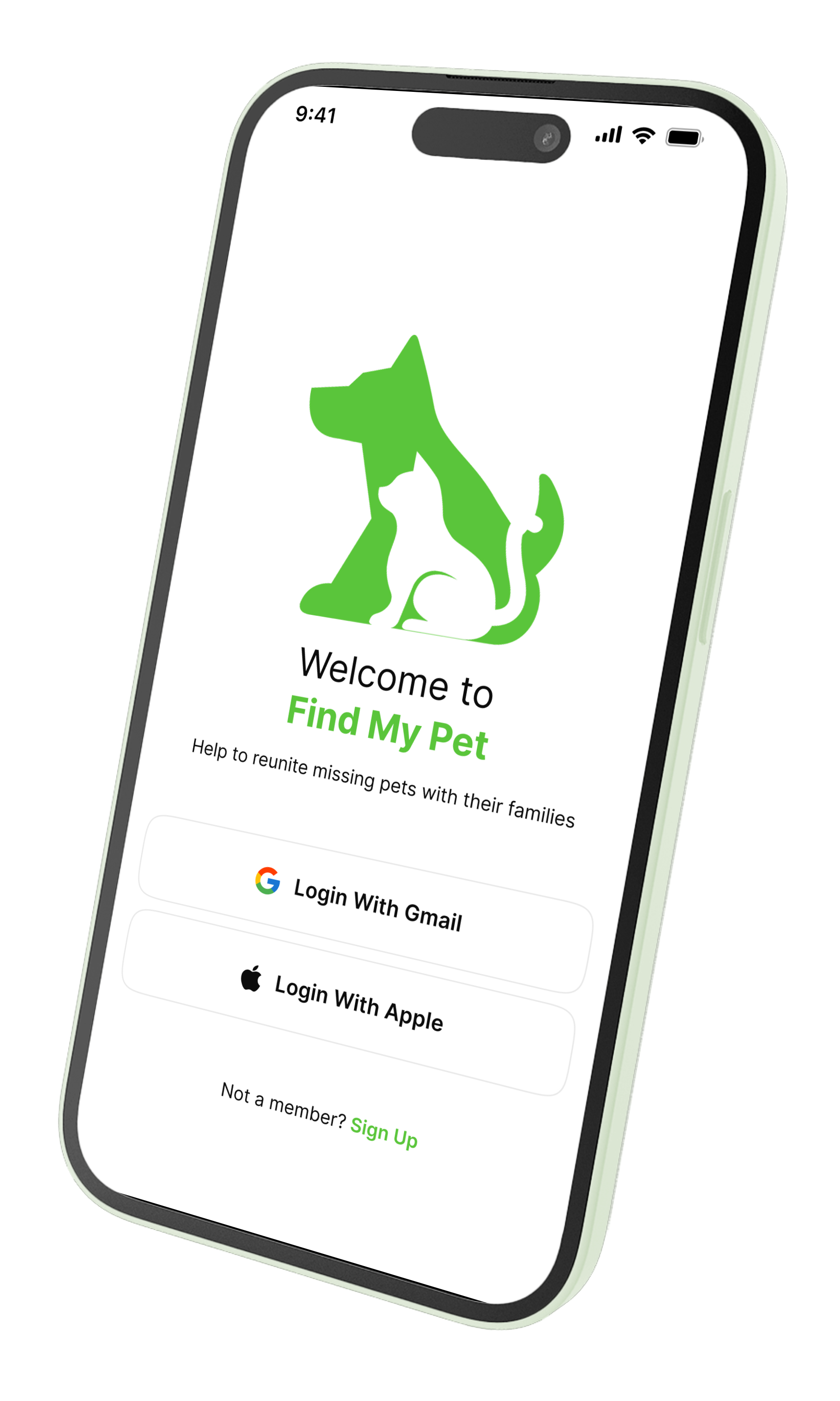
Product: GPS-integrated pet safety and recovery platform
My Role: User Researcher, UX/UI Designer
Responsibilities: Bias-aware research, red route analysis, system architecture, high-fidelity prototyping
Goal: Design a calm, reliable interface for high-stress recovery scenarios while increasing transparency for hardware telemetry (GPS/Battery)
Outcome: Delivered an intuitive safety ecosystem that reduces cognitive load and accelerates recovery through automated community mobilisation
Tools: Figma, Miro (Supported by AI-assisted, bias-aware research methodologies)
Core Deliverables:
Strategic Research: Full synthesis of user behaviors and pain points.
Actionable Insights: Data-driven recommendations that dictated the feature set.
High-Fidelity UI: A polished, accessible interface optimised for high-stress recovery scenarios.
Design process Quick Links:
Introduction: Find My Pet is a safety-critical platform designed to help pet owners locate lost animals. Unlike lifestyle apps, this product is designed for high-stress, time-sensitive scenarios where user cognitive load is at its peak. By integrating real-time GPS telemetry with a community-driven recovery system, the app transforms panic into coordinated action.
Challenges: Losing a pet is an emotionally overwhelming experience. Research showed that existing tracking apps failed users in three specific ways:
Complexity under Stress: Cluttered interfaces made it difficult to find the "Track" button during a panic.
Opacity: A lack of transparency regarding battery life and GPS accuracy led to system distrust.
Isolation: No efficient way to mobilise the local community for help.
01 Research & Discovery Phase
Objective
To investigate pet owners' routines and emotional triggers during loss events, identify systemic gaps in existing tracking technology, and define the technical requirements for a reliable recovery system.
Home screen Prototype
Strategic Research Goals
To move beyond assumptions, I defined three core objectives for the discovery phase:
Map the emotional journey of pet loss to identify peak friction points and cognitive barriers.
Evaluate the "trust gap" in existing GPS tracking hardware regarding battery and signal transparency.
Identify "Red Routes"—the most critical paths to successful recovery—to prioritise the MVP feature set.
Strategic Differentiator:
Ethical Research & Bias Minimisation To ensure the integrity of the data, I utilised AI-assisted auditing to review my interview questions for structural bias and leading language. This allowed for a neutral, ethical environment where participants could provide authentic insights into their behaviors during high-stress moments.
-
Name/Age/Relationship status/Place of residence (Flat, house etc.)
What do you do for work?
Computer/Technical experience. (Computer literacy, technical background).
What kind of pet do you have? (Age, breed, more about personality, character).
Do you think this app would be useful for pet owners and why?
Do you have any fears or past accidents of losing your pet? Describe them.
What kind of features would you like to have in the app?
What kind of people would find this app useful, main user group?
How do you prevent the loss of your pet?
User Personas
Methodology & Ethical Integrity
I executed a multi-layered discovery process to ensure data integrity:
Qualitative Interviews: Deep-dive sessions to capture the emotional and functional stages of pet safety.
AI-Assisted Bias Minimisation: I utilised AI tools to audit my interview scripts for structural bias and leading wording. This ensured a neutral environment that captured authentic user insights.
Synthesis Tools:
User Personas: Clarified the long-term motivations for rapid response.
Lean Personas: Enabled agile decision-making and rapid iteration by focusing on essential behaviours.
User Stories: Translated research into actionable, outcome-focused requirements from the user’s perspective. This ensured every feature addressed a validated user need, keeping design decisions aligned with real-world scenarios.
Example: "As a pet owner, I want to get a real-time alert if my pet leaves a safe zone, so I can take immediate action."
Red Route Analysis: (As identified in goals) Prioritised escape detection and live tracking.
Affinity Sorting: Revealed that Device Trust was as critical to the UX as the tracking itself.
Lean Personas
Why: To capture essential behaviours and goals without overloading documentation, enabling flexibility and quick iteration.
Result: Provided a focused reference for decision-making, allowing prioritisation of features effectively and adapt as insights evolved.
User Stories
Why: To translate research into actionable, outcome-focused requirements from the user’s perspective (e.g., "As a pet owner, I want to get a real-time alert if my pet leaves a safe zone, so I can take immediate action.").
Result: Ensured every feature addressed a validated user need, keeping design decisions aligned with real-world scenarios and measurable value.
Red Routes
Why: To identify and prioritise the most critical tasks that define product success.
Result: Focused design on high-impact journeys—such as escape detection, live tracking, and alerting others—maximising MVP value while reducing friction.
Affinity Sorting
Why: To synthesise qualitative research into clear patterns and actionable insights.
Result: Revealed recurring themes such as emotional urgency, reliance on community, and device trust, directly informing feature prioritisation and strategy.
02 Iteration
Objective
To translate qualitative findings into a high-performance feature set optimized for high-stress usability.
Pet Profile screen Prototype
Evidence-Led Feature Prioritization
Instead of a "lifestyle" app, I focused on a Utility-First model. I mapped core system behaviours to specific user needs identified in my research. As seen in the Table below.
Insight-to-Action Matrix
Key Refinements
Profile screen Mockup
03 Design
Objective
To deliver a production-ready interface grounded in iterative testing, specifically designed to reduce cognitive load for pet owners in distress.
Find My Pet App Prototype
Design for Peace of Mind
The design process focused on high-stress moments, ensuring the system remains a reliable tool for crisis management.
Clarity & Scannability: A streamlined interface designed for varying tech comfort levels, ensuring that real-time alert flows and map-based tracking are intuitive.
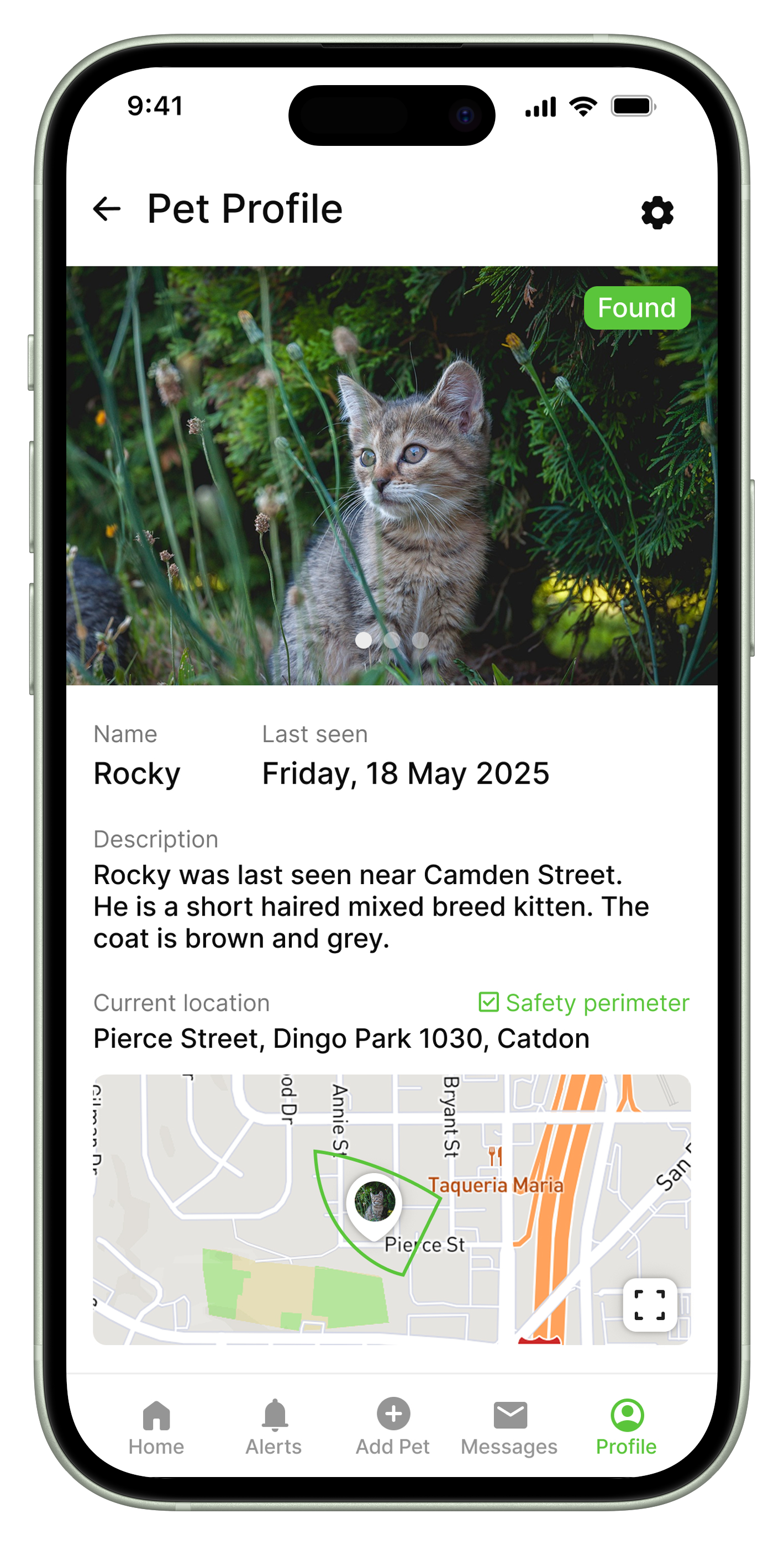
Context-Aware UI: Implementing distinct "Lost" and "Found" indicators to provide clear confirmation and closure for the community.
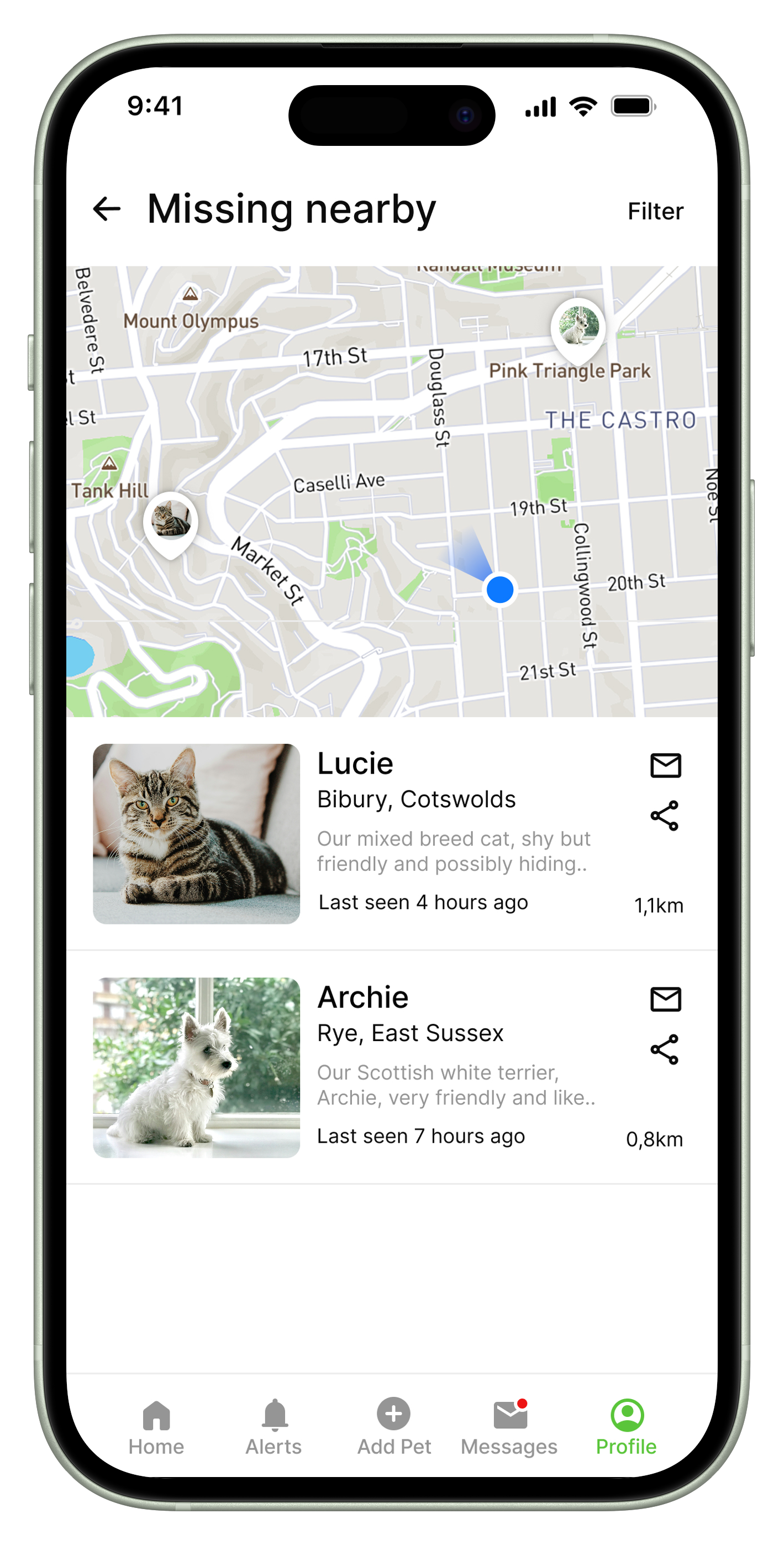
Trust-Centric Aesthetics: Real-time battery indicators and localized community support features (e.g., Missing Nearby, Social Sharing) to deliver greater peace of mind.
-
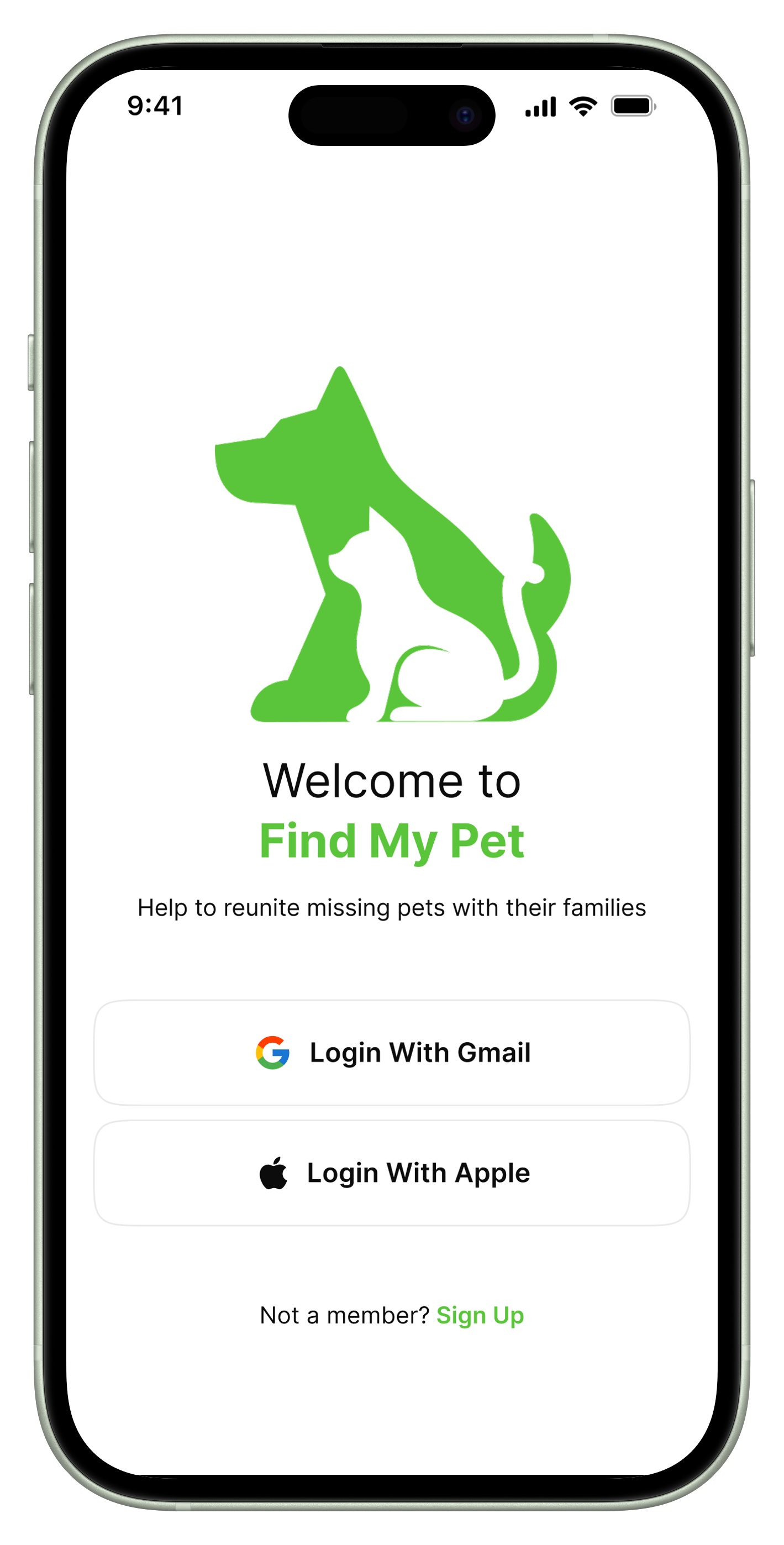
Research Insight: Participants expressed frustration at having to "create an account" before searching.
Iteration: Integrated social authentication (Gmail/Apple) to minimise onboarding friction during emergencies.
-
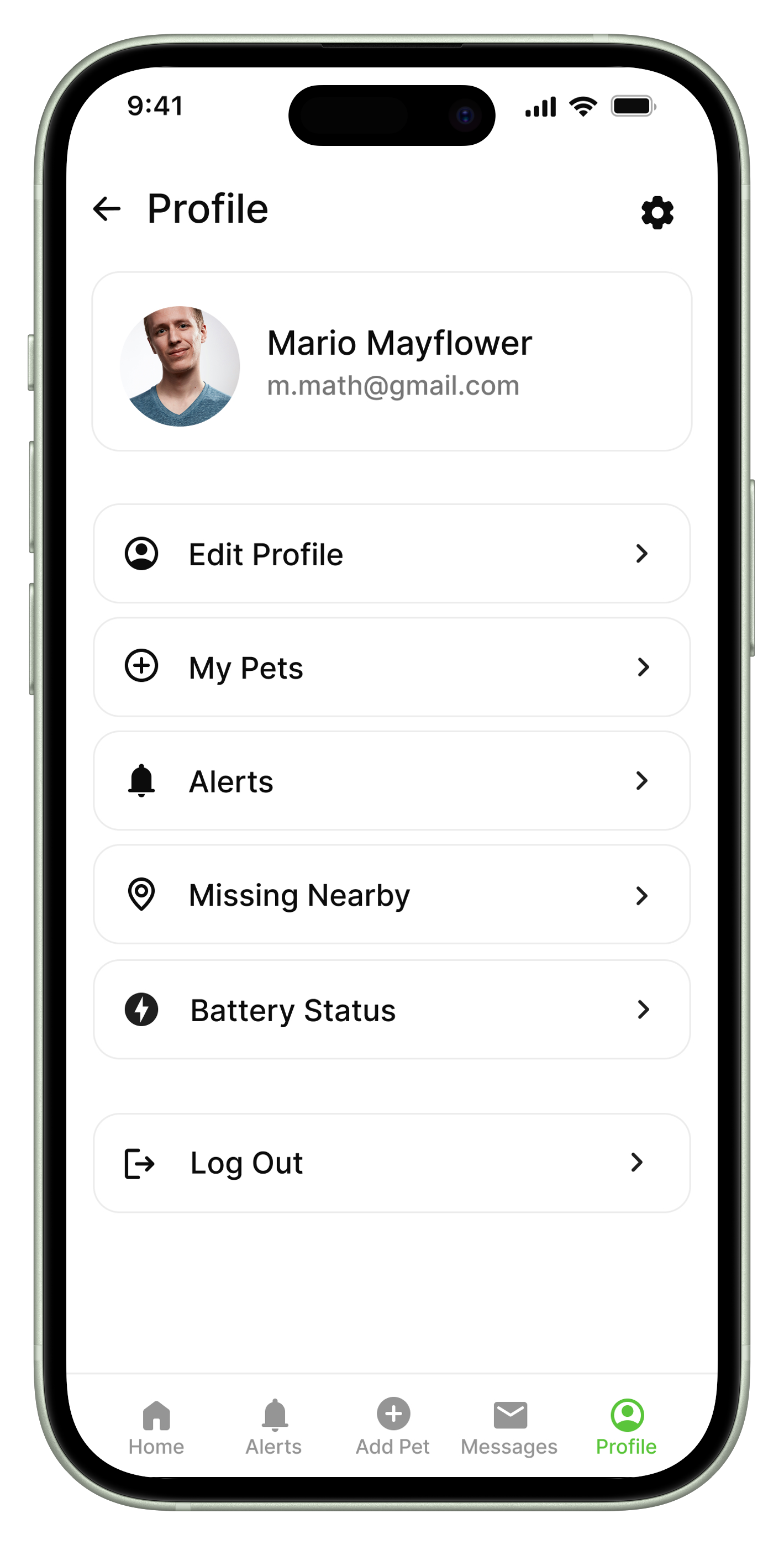
Research Insight: Trust in the device depends on knowing the tracker won’t die mid-search.
Iteration: Added real-time battery indicators and low-battery notifications. with a separate Battery Status button on the Profile screen.
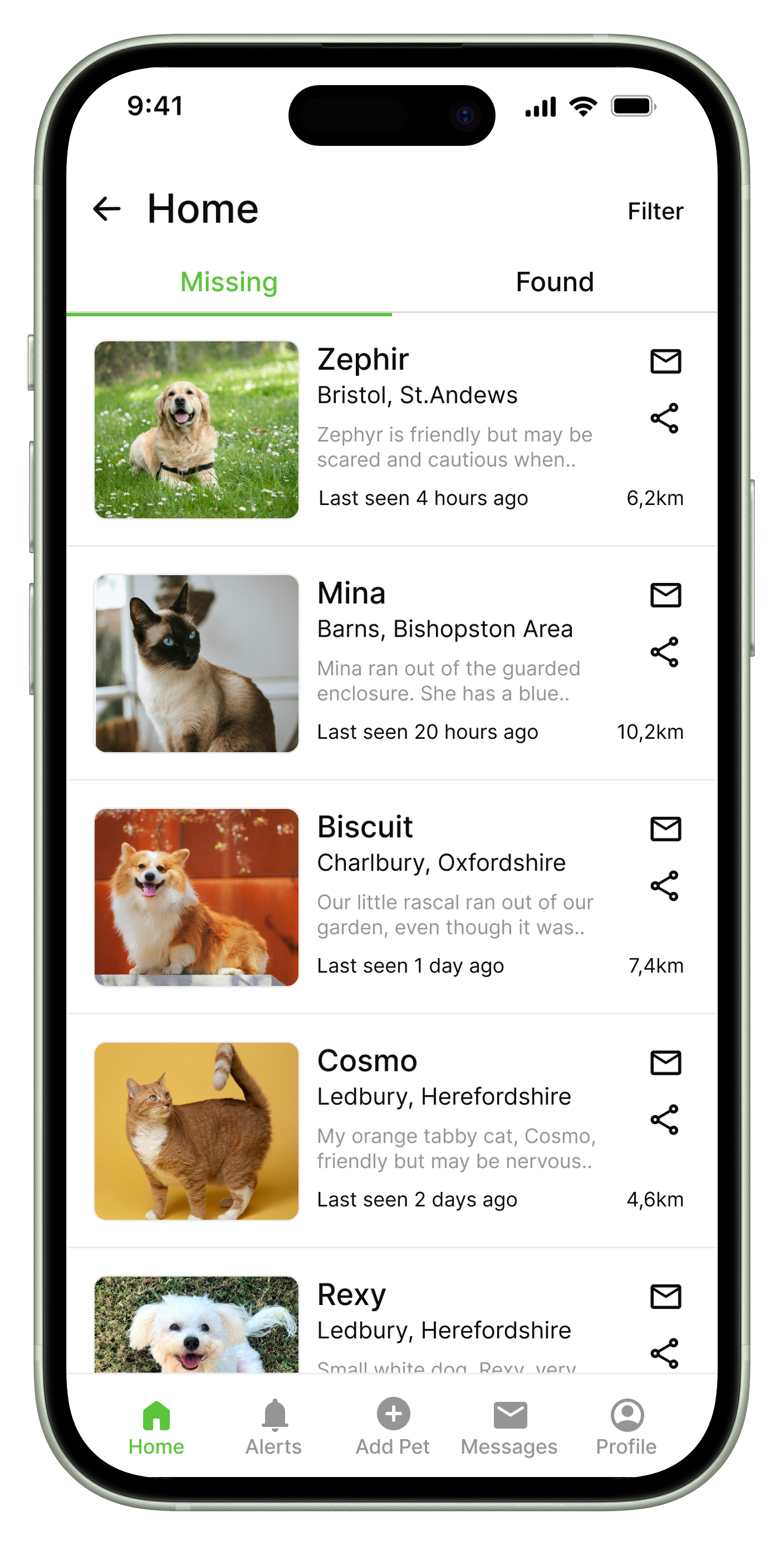
Home screen
Missing nearby screen
-
Research Insight: When searches escalate, users rely on the wider community for support.
Iteration: Integrated a “lost pet” alert sharing option to popular social platforms.
-
Research Insight: Lost-pet searches typically involve multiple people, and users want to alert help quickly.
Iteration: Added this feature that shows missing pets in the user’s nearby area, allowing community members to stay informed and assist in local searches.
-
Research Insight: Users often manage multiple pets — or occasional pets — and need quick setup.
Iteration: Simple, flexible pet profile creation for users with diverse digital literacy.
-
Research Insight: Users need immediate awareness when a pet escapes, as these moments are high-priority and high-stress.
Iteration: Introduced instant notifications triggered the moment a pet leaves its defined safety perimeter.
-
Research Insight: Users want clear confirmation and closure once the search ends.
Iteration: Added a distinct Lost/Found indication on the pet profile to resolve the lost/found status.
-
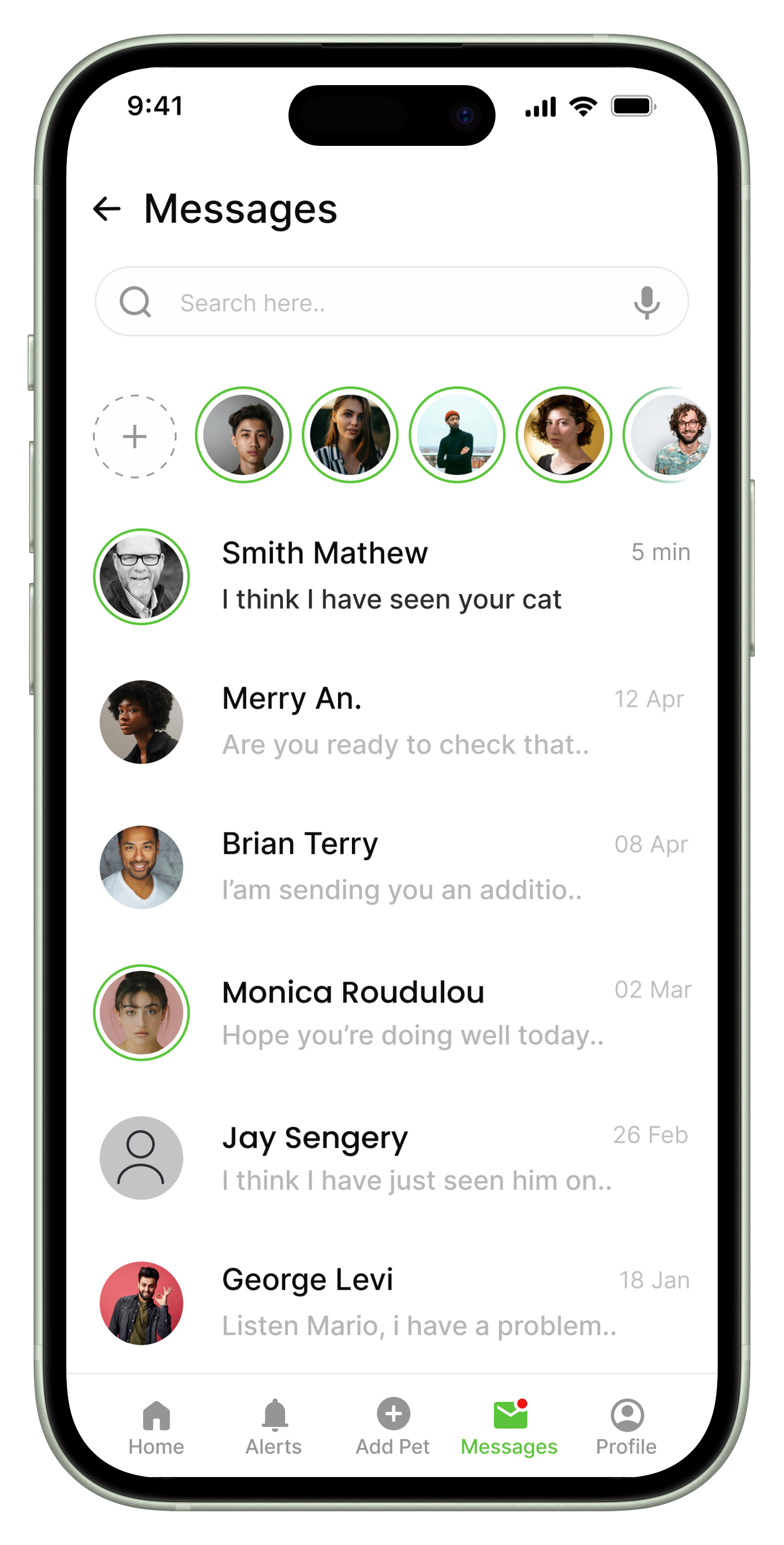
Research Insight: During emergencies, coordination between people is crucial.
Iteration: Enabled direct messaging and community interaction among app users.
Profile screen/ Battery Status Button
Login screen
Deliverables
In-depth User Research: Full synthesis of qualitative data and behavioral patterns.
Actionable User Insights: Data-driven recommendations that dictated the feature set.
High-Fidelity UI: Polished, accessible interfaces for the Home, Mapping, Messaging, and Profile flows.
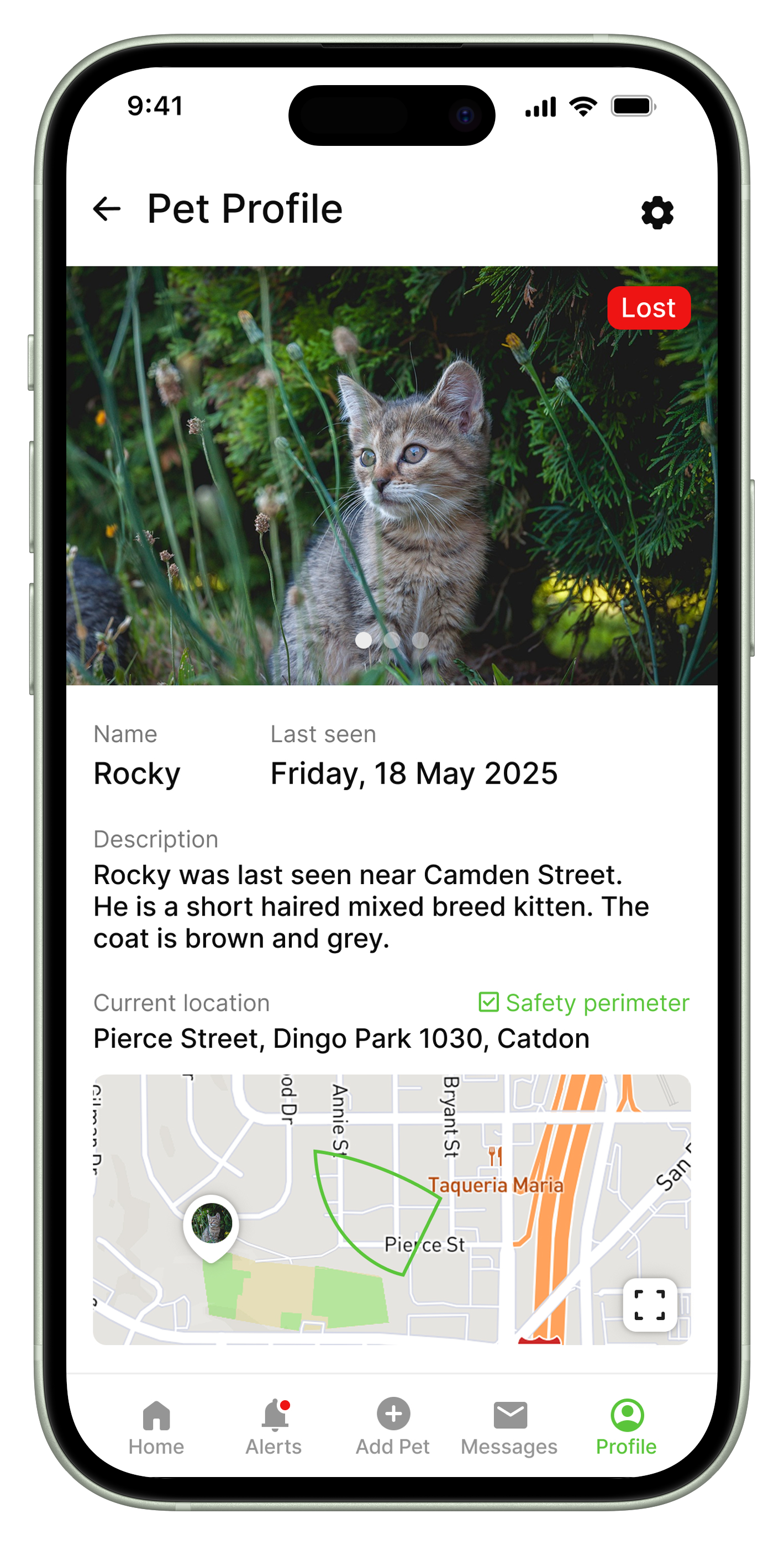
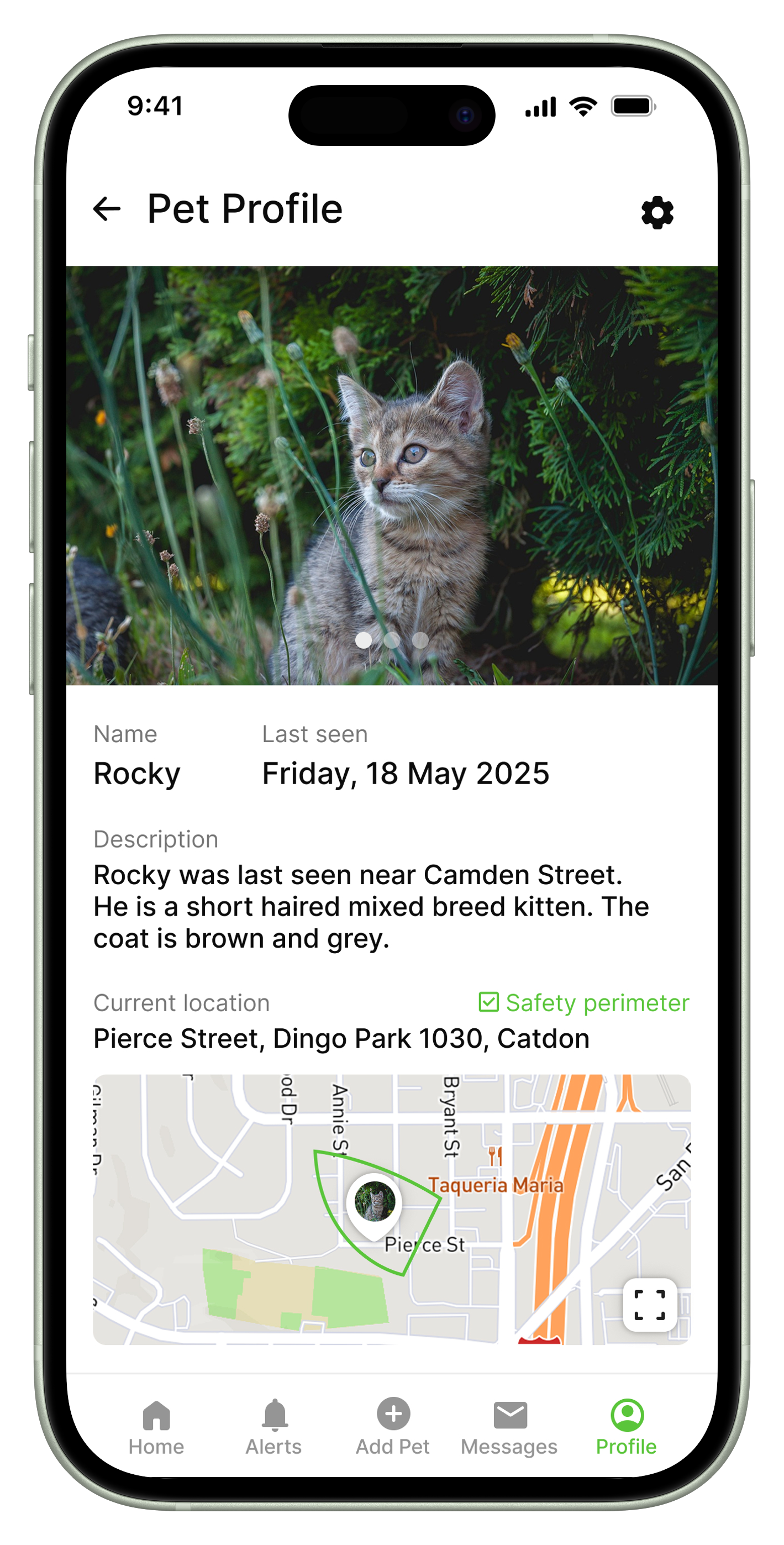
Lost indicator/Safety Perimeter screen/Perimeter Alert
Pet Profile screen
Messages screen/ Message Notification
Found indicator/ Safety Perimeter screen
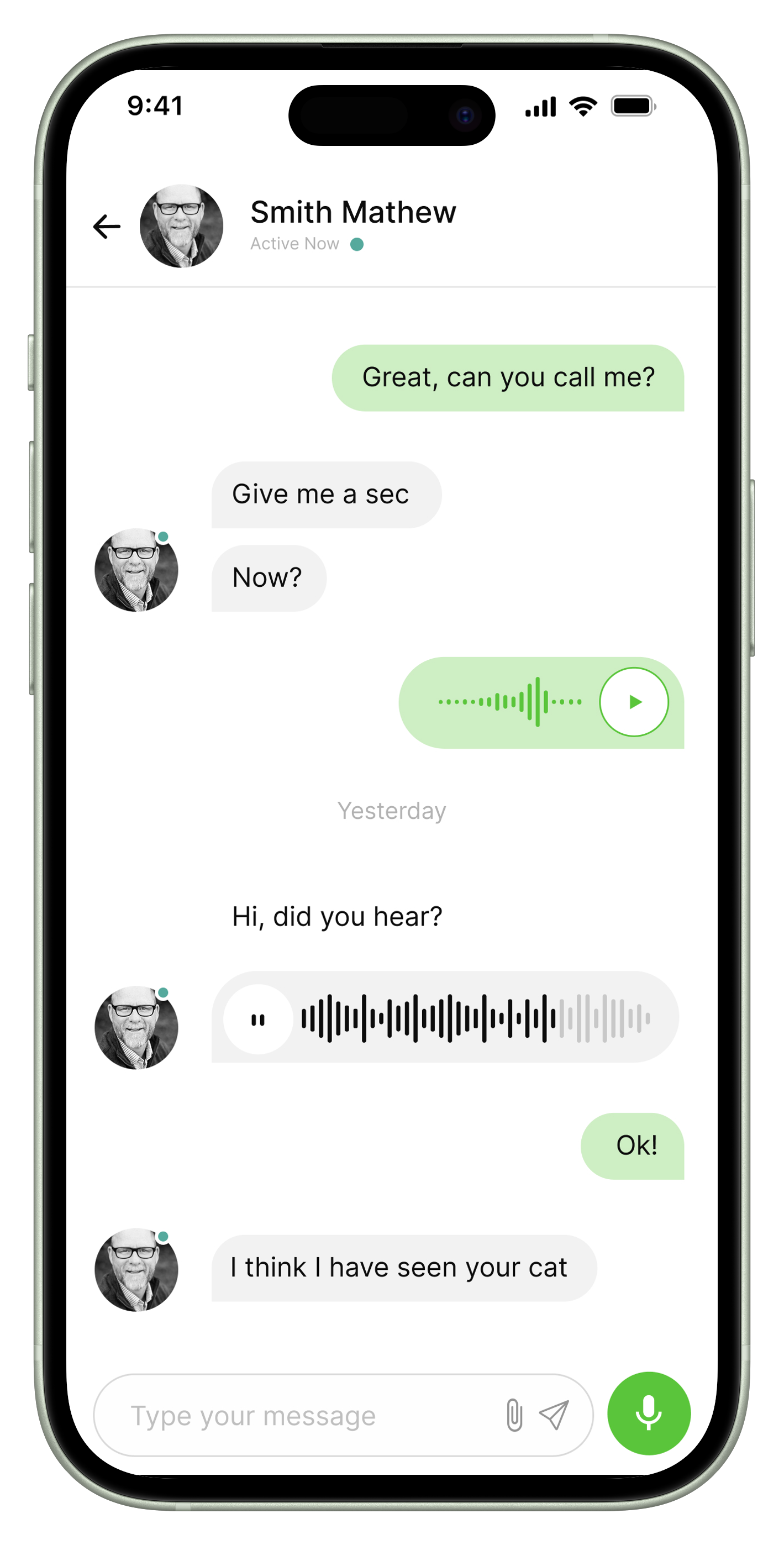
Chat screen
-
Research Insight:
Users need fast, clear, multi-format communication during high-stress lost-pet situations.Iteration:
Added a centralised chat supporting text, images, files, and voice messages for better coordination.
Outcome & Reflection
The final solution is a cohesive safety ecosystem supporting the journey of Prevention → Detection → Search → Recovery.
This project demonstrates my ability to:
Design for emotionally complex contexts: Successfully translating panic-driven user needs into a calming, functional interface.
Maintain Methodological Integrity: From bias-minimized discovery to research-driven prioritization.
Execute End-to-End Product Design: Balancing hardware limitations (battery/GPS) with human-centric software solutions.